
How to Create and Send Electrical Reports and Certificates from the Job (UK, 2026)
A practical walkthrough for UK electricians: which report or certificate a job actually needs, how to capture it on site, and how to send it before you leave.
Updated 2 October 2026
A practical walkthrough for UK electricians: which report or certificate a job actually needs, how to capture it on site, and how to send it before you leave.
Key takeaways
- Match the document to the job: condition reporting, minor works, new installation work, PAT testing and emergency lighting are not interchangeable, and using the wrong one is the kind of mistake other electricians spot immediately.
- “Certificate” and “report” get used loosely in conversation, but the formal form names, Electrical Installation Condition Report, Minor Electrical Installation Works Certificate, are precise for a reason.
- The C1, C2, C3 and FI coding system on an EICR is not optional shorthand. Get the classification wrong and you either alarm a client unnecessarily or leave a real hazard under-reported.
- A report finished and sent from site, with photos and a client signature attached, is far easier to defend later than one written up from memory that evening.
- Where a job needs an EICR, minor works certificate, PAT report, emergency lighting report or smoke alarm report, Checker’s Pro plan adds the scheduling, CRM and reminder tools that support a compliance-heavy electrical workload; Lite covers unlimited reports across all six of Checker’s electrical types without those extras.
Create the report on site as you inspect or test, attach the client’s signature and any photos before you pack up, then generate and send the PDF from the same app before you leave the property. That single habit, close on site rather than at a desk that evening, is the difference between a report that goes out same day and one that gets forgotten in a backlog of half-finished paperwork.
Which document does this job actually need?
Get this wrong once in front of the wrong client and it is remembered. Here is the practical breakdown.
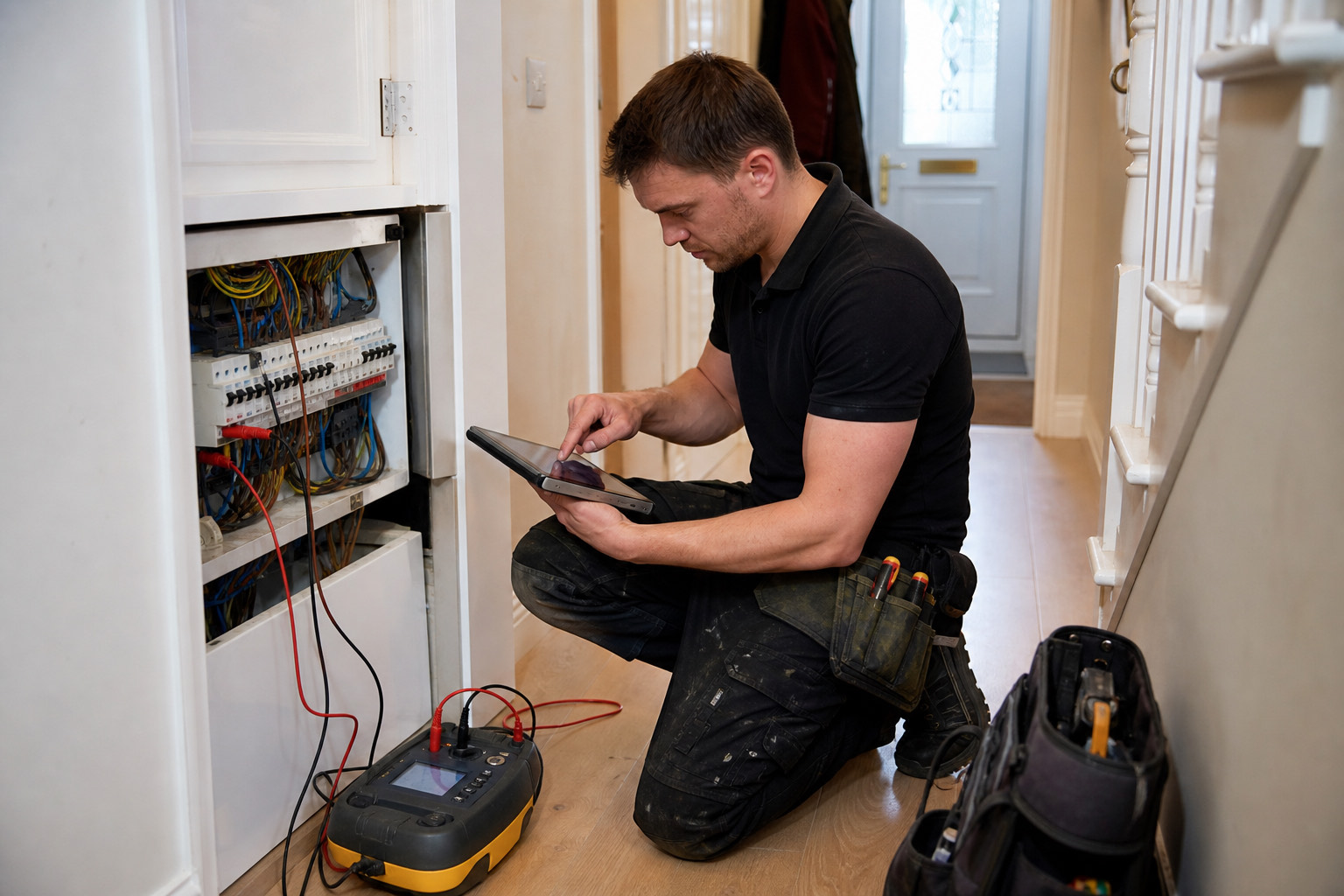
Inspecting an existing installation, with no new work carried out? That is an Electrical Installation Condition Report (EICR). It is the electrical equivalent of an MOT: it reports on the condition of what is already there, rather than certifying anything new. This is the document a landlord needs before letting a property, or a homeowner might commission periodically to check ageing wiring.
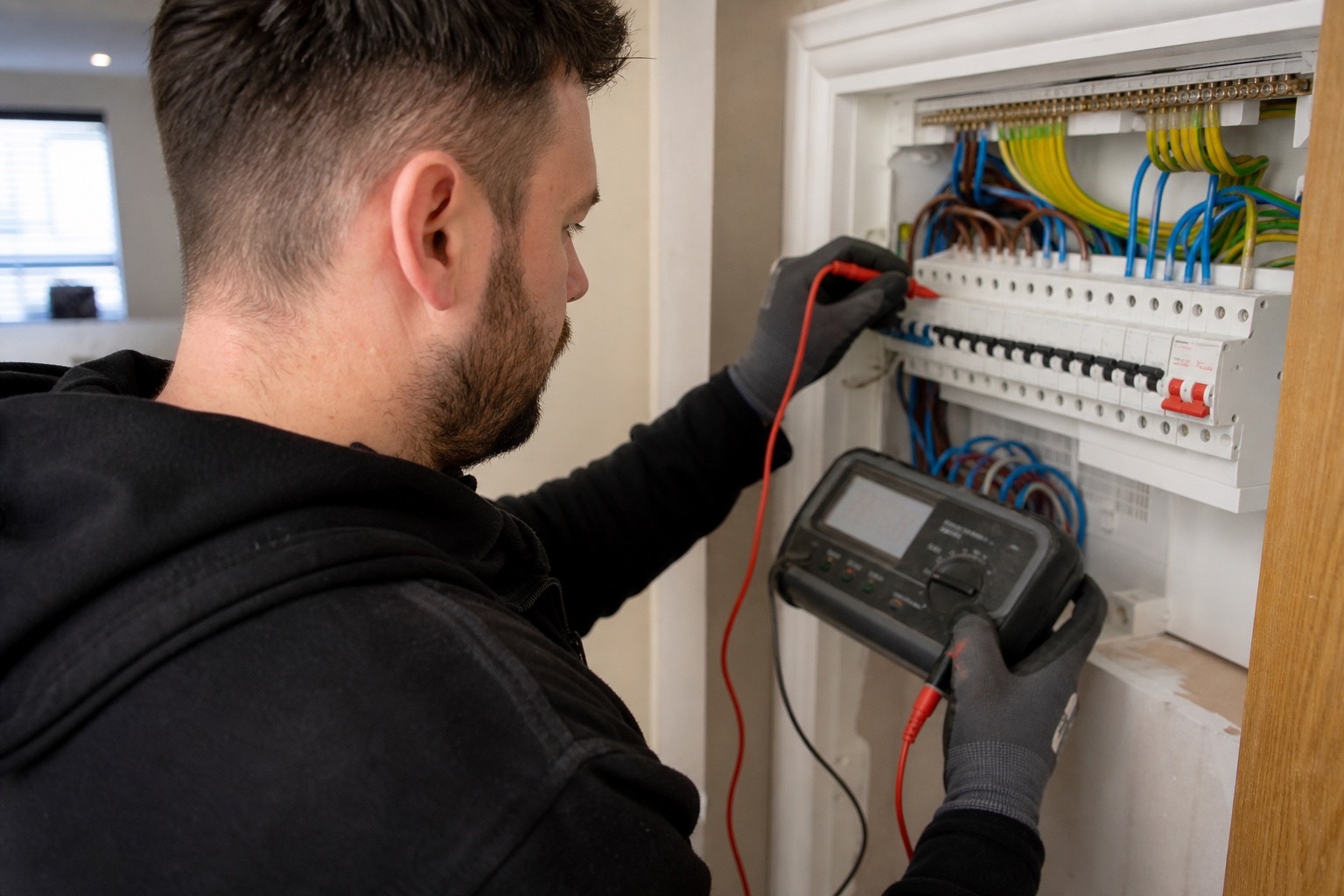
Adding to or altering an existing circuit? A single socket added, a light fitting replaced, a circuit breaker swapped, work that does not amount to a new circuit, is recorded on a Minor Electrical Installation Works Certificate. It is a lighter-weight form than a full installation certificate because the scope of work is small.
Installing a new circuit or new equipment? That is new installation work, certified separately under BS 7671 by whoever designed, built and tested it, distinct from both an EICR and a minor works certificate because it covers work that did not exist before, not an inspection of existing wiring and not a minor alteration.
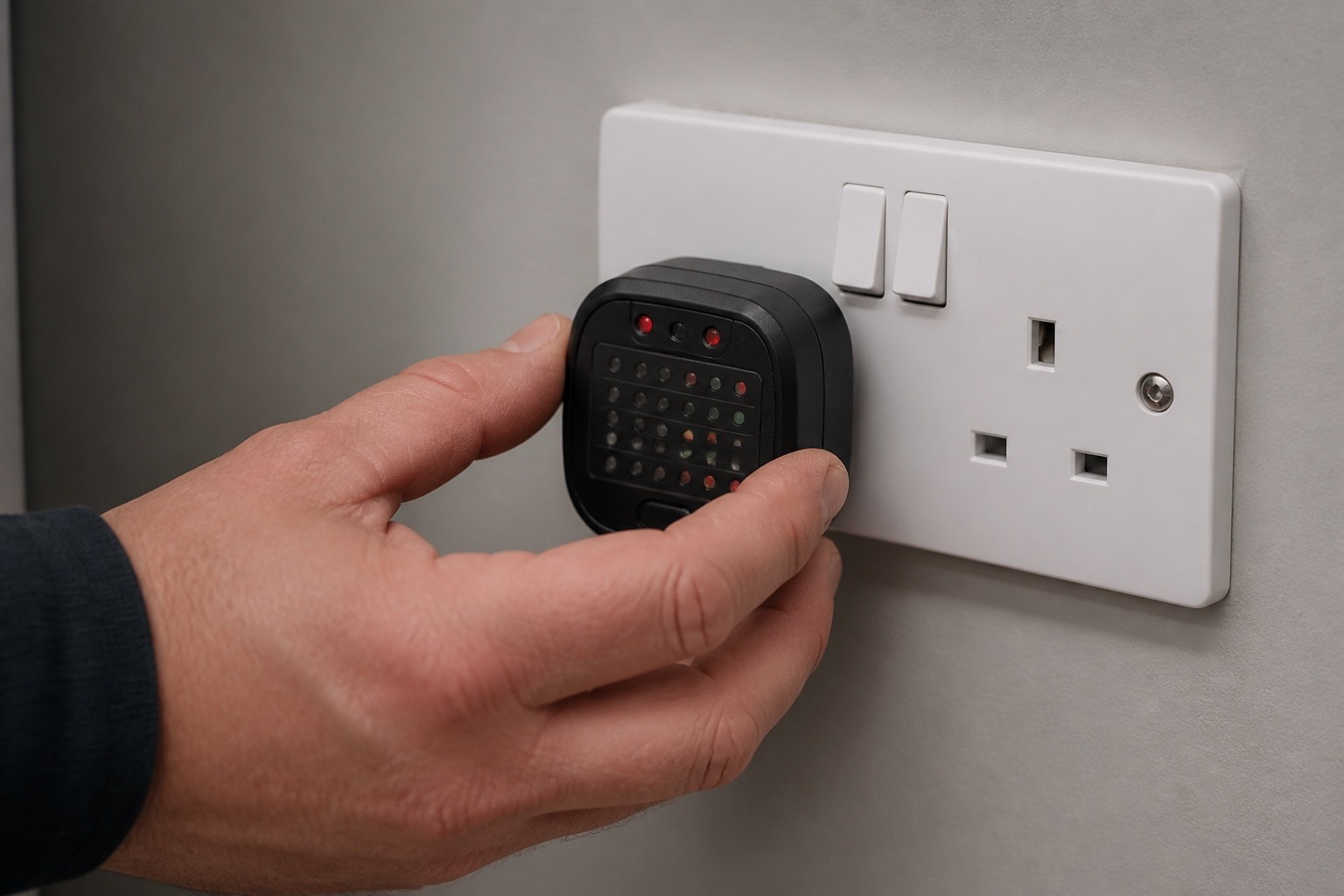
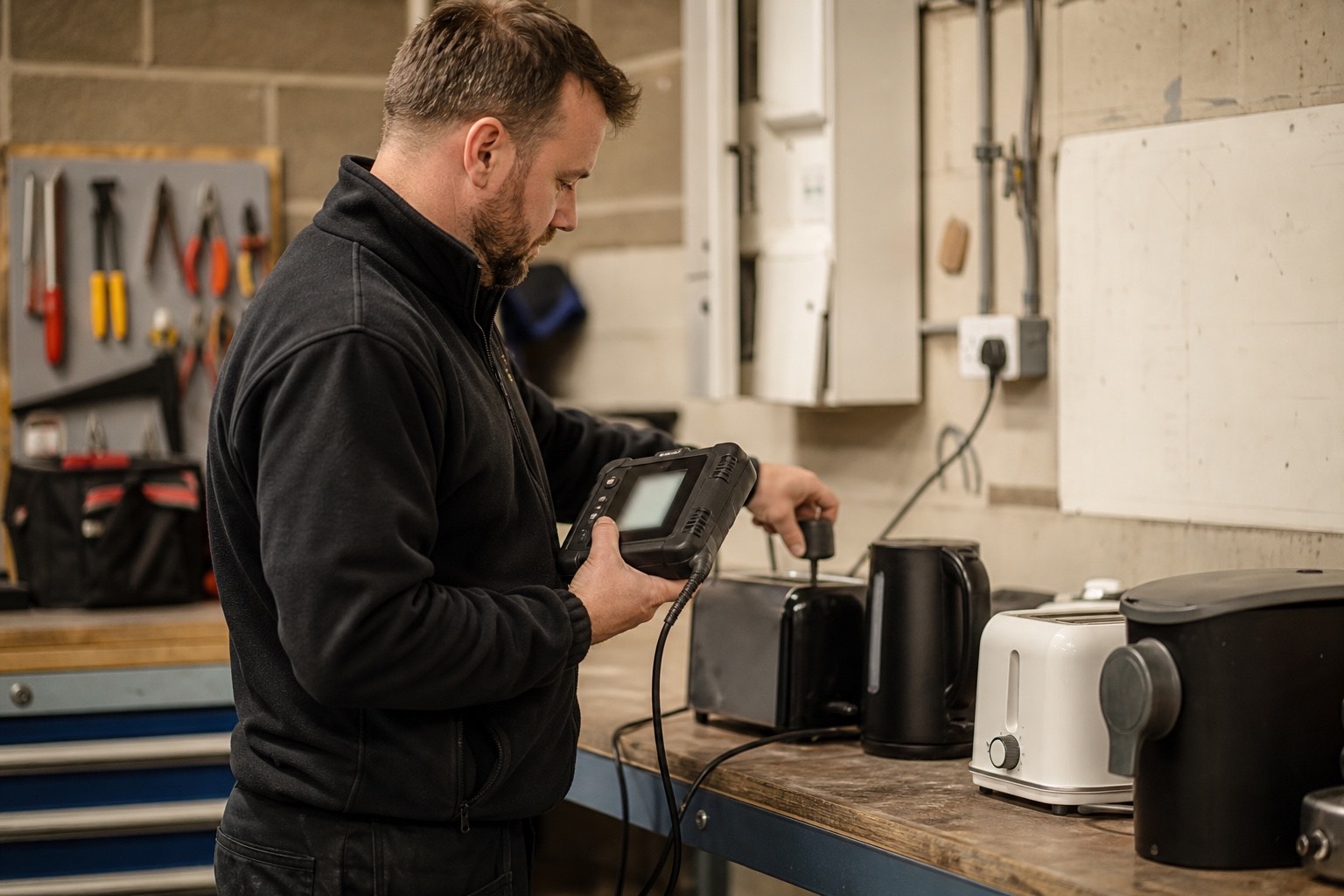
Checking portable appliances? That is PAT testing, and it produces a PAT Testing Report rather than any of the above. It is a different scope entirely: appliances plugged into the fixed installation, not the fixed installation itself.
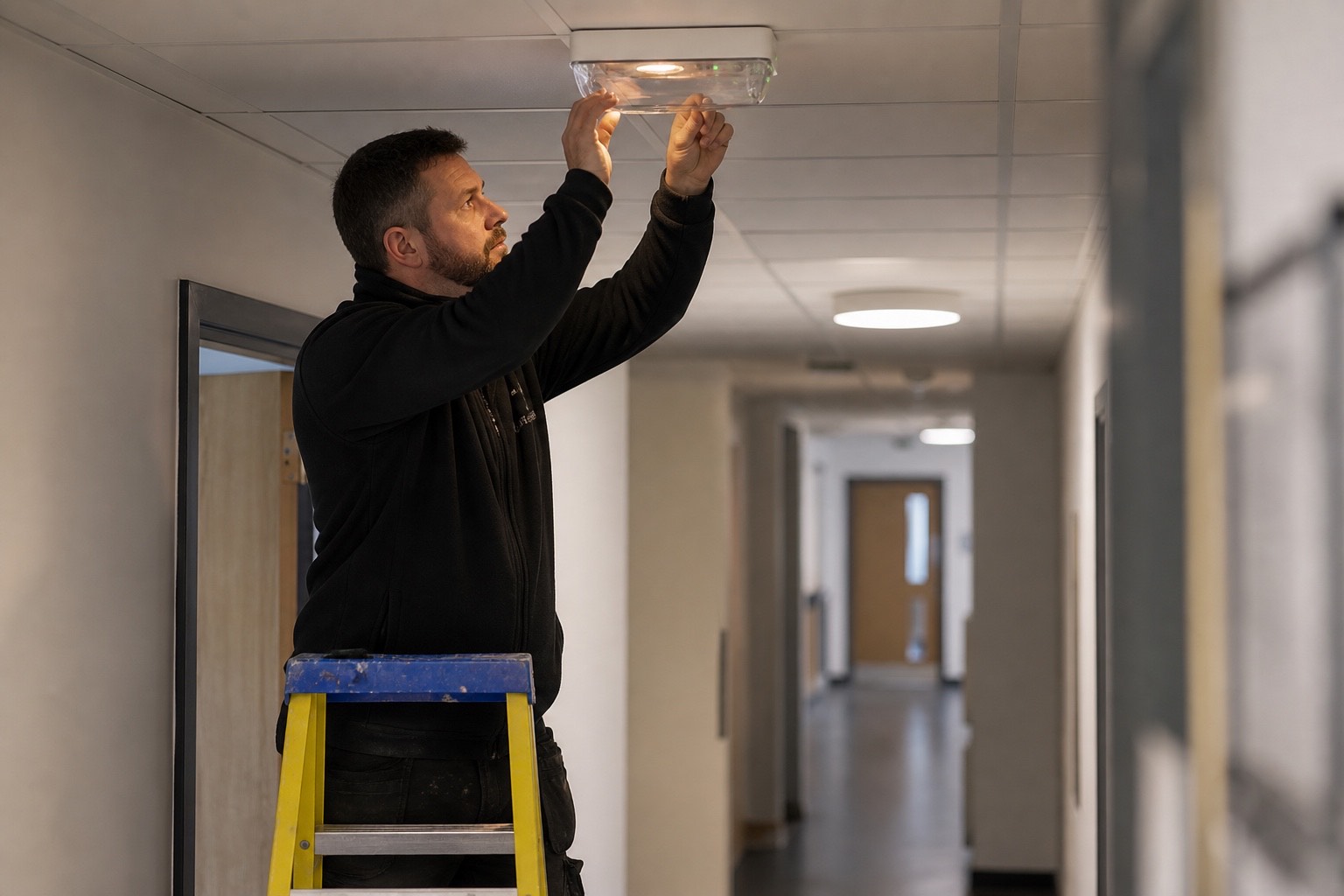
Checking emergency lighting? An Emergency Lighting Inspection and Test Report, covering the periodic testing regime set out in BS 5266, which governs how emergency escape lighting in commercial and multi-occupancy buildings is inspected and tested over time.
Checking smoke alarms in a new or converted property? A Smoke Alarm Design and Commissioning Report, confirming the alarm system was designed and commissioned correctly, separate again from the electrical installation reports above.
Mixing these up is not a paperwork technicality. A landlord who is handed an EICR when the property actually needed a minor works certificate for a single socket change, or vice versa, will notice, and so will any electrician who later reviews the file.
Checker’s electrical reporting covers Electrical Installation Reports, EICRs, Emergency Lighting Inspection and Test Reports, Minor Electrical Installation Works Certificates, PAT Testing Reports and Smoke Alarm Design and Commissioning Reports. If a job on your books needs a document type outside that list, confirm current coverage before you rely on it.
Why “certificate” and “report” get confused, and how to talk about it
In everyday conversation, most people, clients included, say “certificate” for almost any piece of electrical paperwork. Ask a landlord what they need and they will usually say “the electrical certificate,” even when what actually satisfies the requirement is a report.
The two words are not interchangeable once you look at the formal names. An EICR is a report: it records the condition of an existing installation at the time of inspection, and its classification codes reflect that. A Minor Electrical Installation Works Certificate is a certificate: it certifies that specific defined work was carried out and tested to standard. The distinction is not pedantic. A report describes what an inspector found; a certificate confirms that new or altered work meets requirements.

The practical habit worth adopting with clients is simple: use the proper form name for the document you are actually issuing, and keep “certificate” for situations where that is genuinely the correct term. When you are talking generally, referring to the general category of paperwork a job produces, “report” is usually the more accurate word, since most electrical documentation is reporting on condition or test results rather than certifying newly designed work. Explaining that distinction to a client up front, in one sentence, avoids confusion later about what they actually received.
The practical field workflow, start to finish
A report finished before you leave the property is worth more than one written up from memory that evening. Here is the sequence that gets you there.
- Capture readings and observations as you go. Whether it is insulation resistance and earth loop impedance figures for an EICR, or a circuit-by-circuit check for a minor works job, record them against the relevant schedule as you take them, not on a scrap of paper to be transcribed later. Transcription is where numbers get mixed up.
- Note observations with the correct code immediately. If something needs a C1, C2, C3 or FI classification, or an equivalent note on a different report type, record it at the point you find it, with a short description of what and where. Waiting until the end of the job to remember every observation is how details get lost.
- Photograph anything that supports the finding. A photo of a damaged consumer unit, an unearthed accessory or a burnt connection does two things: it supports your classification if it is ever queried, and it helps whoever reads the report later, landlord, letting agent or the next electrician, understand exactly what you found without needing to visit.
- Take the client’s signature before you leave. A signed-off report at the point of completion is far stronger evidence than one signed days later, or not at all, because the client confirms what they were told and what was found while it is still fresh and while you are both standing in the property.
- Generate the PDF on site. This is the step that separates a same-day report from a backlog. If the report can be generated and reviewed on a phone or tablet before you get back in the van, there is no evening admin session waiting for you.
- Send it before you leave, or from the van immediately after. A landlord or client who receives their report within the hour, rather than days later, notices. It is also one less thing sitting in your inbox to remember.
Checker’s electrical reporting is built around this exact sequence: capture readings and observations on the app during the job, attach photos and a client signature, then generate and send the PDF before moving to the next job, all from a phone or tablet, and it also works offline for properties with poor signal, syncing once you are back in range.
Getting the classification right first time
The C1, C2, C3 and FI coding system, set out in BS 7671 inspection and testing guidance and covered in detail in IET Guidance Note 3, is where accuracy matters most, because the classification is what a landlord, tenant or duty holder acts on.
C1, danger present. This means there is an immediate risk of injury right now. A C1 observation should not be left as found. The convention is that the electrician makes it safe before leaving the property, then records what was found and what was done about it.
C2, potentially dangerous. Not immediately hazardous, but could become so. This needs urgent remedial work, distinct from a same-visit fix, and under the Electrical Safety Standards in the Private Rented Sector (England) Regulations 2020, landlords must complete remedial work for C1, C2 and FI observations within 28 days of the report, or sooner if the report specifies a shorter period.
C3, improvement recommended. The installation does not meet current BS 7671 requirements, but the departure does not create immediate or potential danger. A C3 is advisory. On its own, it does not make an EICR unsatisfactory.
FI, further investigation required. Used when something cannot be fully assessed during the inspection itself. Once investigated further, it typically resolves into a C1, C2 or C3.
An EICR is recorded as unsatisfactory if it contains any C1, C2 or FI observation. C3s alone do not tip it into an unsatisfactory result. Getting a classification wrong in either direction has real consequences: over-classify and a landlord faces unnecessary urgent work and cost; under-classify and a genuine hazard goes unaddressed within the timescale it needed.
Storage, retrieval and re-issue: why it matters after the job is done
The job is not finished when the PDF is sent. A report needs to be retrievable, sometimes years later, and that is where a lot of paperwork systems quietly fail.
Disputes. If a landlord, tenant or insurer ever questions a finding, the original report, with its timestamp, exact readings, classification and the client’s signature, is the record that settles it. A vague recollection or a misplaced paper copy does not.
Landlord and duty-holder requests. Under the Electrical Safety Standards in the Private Rented Sector (England) Regulations 2020, landlords must give tenants and, on request, the local authority a copy of the most recent EICR, and after any remedial work, written confirmation that it was carried out within 28 days. If that request comes in eighteen months after the original inspection, being able to pull up the exact report and reissue a copy in minutes, rather than searching through old paperwork, is what keeps a landlord compliant and keeps you out of an awkward conversation.
Property transactions and re-lets. A new letting agent, a mortgage valuation, or a property sale can all trigger a request for the most recent electrical report. Cloud-stored reports that survive a change of device, a change of laptop or even the loss of a phone protect against a compliance document effectively disappearing.
This is one of the areas where digital record-keeping earns its cost over a paper folder or a spreadsheet: reports created in Checker are stored against the client’s history in the app, so re-issuing a copy of an EICR, PAT report or minor works certificate from two years ago is a retrieval task, not a search. It also connects with scheduling: Checker’s annual service reminder, which reminds a customer eleven months after they were added, means the next EICR or PAT round due for renewal does not depend on someone remembering the date. That reminder sits alongside Checker’s other automations, appointment reminders, a quote chaser and an invoice chaser, so nothing about the compliance calendar depends on someone remembering to look.

Where Checker fits, and what tier you need
For an electrician issuing EICRs, minor works certificates, PAT testing reports, emergency lighting reports and smoke alarm reports, all of Checker’s electrical report types are unlimited on every plan, including the Lite tier at £10.99 a month. Lite covers unlimited digital records and reports, invoicing, quotes, job sheets and card payments through Zettle, which is enough for a sole trader who mainly needs to generate and send reports without a CRM or scheduling layer.
Where it makes sense to move up to Pro, at £19.99 a month, is once the compliance workload needs managing rather than just recording: Pro adds customer history and CRM, annual service reminders so EICR and PAT renewals are not tracked manually, job scheduling and a diary, and two-way sync with Xero, QuickBooks or Sage so invoices and payments raised against a report flow into the accounts without re-entry. For a growing team where each electrician needs their own login while work still lands in one shared account, Pro+ at £25.99 a month adds unlimited sub-users. The trial does not need card details, and real reports can be created during it, so it is possible to test the exact field workflow above, capture, sign, generate, send, before committing to a plan.
Frequently asked questions
What is the difference between an electrical report and an electrical certificate?
In everyday use, tradespeople and clients both say ‘certificate’ for almost any electrical document, but the formal names differ by job type. An inspection of an existing installation produces an Electrical Installation Condition Report (EICR), which reports on condition rather than certifying new work. A small addition or alteration to an existing circuit is recorded on a Minor Electrical Installation Works Certificate. New circuits and larger installation work are certified separately under BS 7671 by the person who designed, built and tested them. The safest habit is to use the proper form name for the job and only use ‘certificate’ loosely when you mean the general idea of a compliance document.
What does a C1 code mean on an EICR?
C1 means danger present, with a risk of injury right now. Under BS 7671 inspection and testing guidance, a C1 observation cannot be left as found. The inspector should make it safe before leaving the property, then record it on the report.
What does a C2 code mean on an EICR?
C2 means potentially dangerous. The installation is not immediately hazardous but could become so, so it needs urgent remedial work rather than same-visit action.
What does a C3 code mean on an EICR?
C3 means improvement recommended. The installation does not meet current BS 7671 requirements but does not present immediate or potential danger. A C3 on its own does not make the report unsatisfactory.
What does an FI code mean on an EICR?
FI means further investigation required, without delay, for a fault that cannot be fully assessed during the inspection. Once investigated, it typically resolves to a C1, C2 or C3.
How often does an EICR need to be renewed?
For rented property in England, landlords must have the electrics checked at least every 5 years, or sooner if the previous report specifies a shorter interval, under the Electrical Safety Standards in the Private Rented Sector (England) Regulations 2020. Electrical Safety First recommends owner-occupied homes are checked at least every 10 years.
How long does a landlord have to fix problems found on an EICR?
Under the same regulations, a landlord must complete any remedial or further investigative work within 28 days of the report, or within a shorter period if the report specifies one, and then give written confirmation to the tenant and local authority.
How often should PAT testing be carried out?
The Health and Safety Executive does not set a fixed legal interval. HSE guidance treats PAT testing as one part of a wider maintenance approach and expects the frequency to reflect the type of equipment, how often it is used and the environment, rather than a single number applied to everything.
Why does it matter where the finished report is stored?
If a tenant, landlord, letting agent or local authority asks for a copy months or years later, the electrician who can retrieve the original signed report quickly is in a stronger position than one relying on a paper copy in a van or a folder on a desktop. It also matters if a report’s findings are ever disputed, since the original record with its timestamp, readings and signature is the evidence.
Related reading on Checker
Get your reporting workflow on one app
If reports and certificates from the job are currently a mix of apps, paper and evening admin, try the electrical reporting workflow on a real job.
Get Started FreeAuthoritative sources
- GOV.UK: electrical safety standards in the private rented sector
- Electrical Safety First: frequently asked questions
- HSE HSG107: maintaining portable electric equipment
- iCertifi: EICR coding explained, C1, C2, C3 and FI under BS 7671
- Professional Electrician: BS 5266 emergency lighting requirements
This guide is operational and compliance-awareness information, not legal or electrical-engineering advice. Follow BS 7671, the relevant IET Guidance Note and current regulations for the definitive classification and duty on a specific job.