
Switching From a Gas Certificate App to All-in-One Software: A Guide for UK Gas Engineers (2026)
A 2026 guide for UK gas engineers moving from a standalone certificate app to all-in-one software: what to check before you switch, how to move without losing records, and the destinations compared.
Switching From a Gas Certificate App to All-in-One Software: A Guide for UK Gas Engineers (2026)
A standalone certificate app does one job well. The trouble starts when your diary, your invoicing and your customer history all live somewhere else. This guide is for gas engineers weighing up the move to one app that does the lot, and how to make the switch without losing a single record.
By Daniel Sedgwick, Founder of Checker and a former gas engineer
Most gas engineers start with a certificate app because the certificate is the non negotiable bit. An app that turns out a clean, compliant gas safety record on a phone is a genuine upgrade on a carbon copy pad, and tools like GasCert, Gas Certificate App and Gas Engineer Software do that part well.
For engineers using a genuinely standalone certificate app, the friction shows up around the certificate. The record is in one app, the diary is in a calendar, the invoice is in a separate tool or a notebook, and the customer’s history is scattered across all three. You end up typing the same job details three times, and the follow up that wins repeat work never gets sent because nobody owns it. Broader products such as Gas Certificate App and Gas Engineer Software already bring those functions together, so the relevant question may be whether their workflow, depth and price fit your business.
All-in-one software folds the certificate into the rest of the job: the record, the schedule, the invoice and the customer sit in one place. This guide covers what a standalone app does well, what you gain by consolidating, exactly what to check before you switch, and how to move your records across safely. If your question is narrower, our comparison of the best software for Gas Safety Records and certificates looks purely at the record side.
Key takeaways
- A standalone certificate app is strong on the form and light on everything around it: the diary, invoicing, payments and customer history usually live in separate tools.
- Moving to all-in-one software means the gas safety record flows straight into the invoice and the customer’s history, and the annual reminder that wins repeat work has an owner.
- Before you switch, check four things: can you export your existing certificates and customer list, will past records stay accessible, is there a contract or lock-in, and does the new app work offline where you actually work.
- A landlord’s gas safety record must be renewed within twelve months, kept for at least two years, and copied to the tenant within 28 days, so any tool you move to has to make retrieval and renewal tracking easy, not just generate the certificate.
On this page

GasCert by iCertifi
GasCert is the gas focused product from iCertifi, built around fast, compliant certificate templates. As a certificate tool it does its job well and works offline, which suits engineers whose main need is turning out records quickly on site.
What it does not include is native job management or invoicing beyond a beta add on, so most engineers using it still run a separate diary and a separate accounting tool alongside. Pricing is per app across the iCertifi range: the entry level Fire Safe app is around £14.99 a month, while the GasCert gas app itself is around £25.99 a month. It is a strong certificate app; it is not the whole business in one place.

Gas Certificate App
Gas Certificate App, from Trade Apps Ltd, is a long standing mobile app for producing gas certificates and records on a phone or tablet, and it is strong on the forms themselves.
Trade Apps has built out the surrounding tools too. The app markets a calendar and diary, job scheduling, customer records, a built in invoice and estimate system with quoting, and sync to QuickBooks and Xero, so it reaches beyond a pure certificate tool. That makes it closer to an all rounder than the genuinely certificate first apps in this guide, though buyers should still check on a demo how deep each of those job and payment features runs for their own way of working.

Gas Engineer Software
Gas Engineer Software, often shortened to GES, is an all-in-one job and customer management platform for heating and plumbing businesses. Alongside gas safety records and other certificate types, it offers customer and address records, job histories, scheduling, quotes, invoices, payments and automated service reminders. Its mobile app also supports offline work.
Pricing starts at around £18 per user per month on the annual Starter plan, or £19 paid monthly. Core is around £23 annually or £25 monthly and adds team scheduling, quoting, invoicing, online payments and automated reminders. Pro is around £30 annually or £32 monthly and adds accounting integrations. There is no fixed contract. That makes GES a genuine all-in-one option, not a certificate-only app; buyers should compare its workflow, integrations and plan inclusions with the other platforms here.
What you gain by consolidating
The case for moving is not that certificate apps are bad. It is that a certificate is only ever part of a job. When the record, the diary, the invoice and the customer live in one app, three things change. You stop retyping the same job details into three tools. The invoice can be raised, and even paid, on the back of the certificate you just issued. And the annual service reminder that brings a landlord or homeowner back next year finally has somewhere to fire from automatically, rather than depending on someone remembering.
That last point is where the money is. Repeat work is far cheaper to win than new work, and a gas safety visit is an annual event by law. An app that ties the renewal date to the customer record, and chases it for you, turns compliance paperwork into a booking engine. Our guide to the best all in one app for UK tradespeople covers how those pieces connect.
What to check before you switch
Switching software is only painful if you skip the homework. Before you commit to a new tool, get clear answers to four questions.
Can you export
Can you get your existing certificates and your customer list out of the old app, as PDFs and a spreadsheet?
Past records stay reachable
You must keep gas safety records for at least two years, so make sure old certificates stay accessible after the move.
Contract and lock-in
Check whether the new tool is month to month or ties you into a twelve month term before you have proven it fits.
Offline where you work
If you lose signal in plant rooms and basements, confirm the new app captures certificates offline.
How to move without losing a record
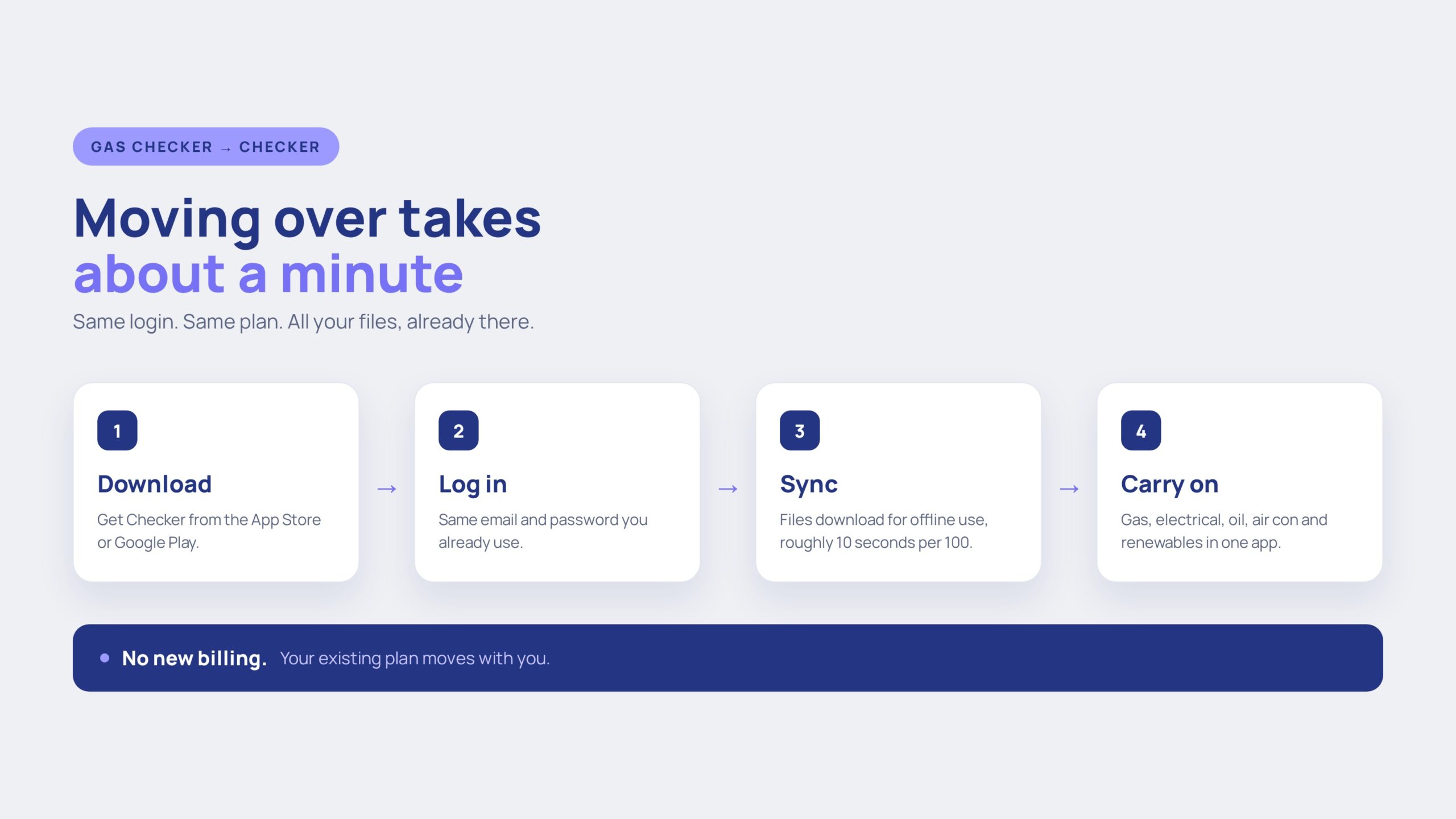
A clean switch takes an evening, not a lost week. Export your existing certificates as PDFs and your customer list as a spreadsheet from the old app. Set up the new app and import or upload the customer list first, so the history is there to attach jobs to. Keep the old app read only for a short overlap while you confirm nothing is missing, then run your next few jobs entirely in the new tool before you cancel the old subscription. Because a landlord gas safety record has to be kept for at least two years, the safe rule is simple: never delete the old records until you have confirmed copies stored in the new system.

Checker
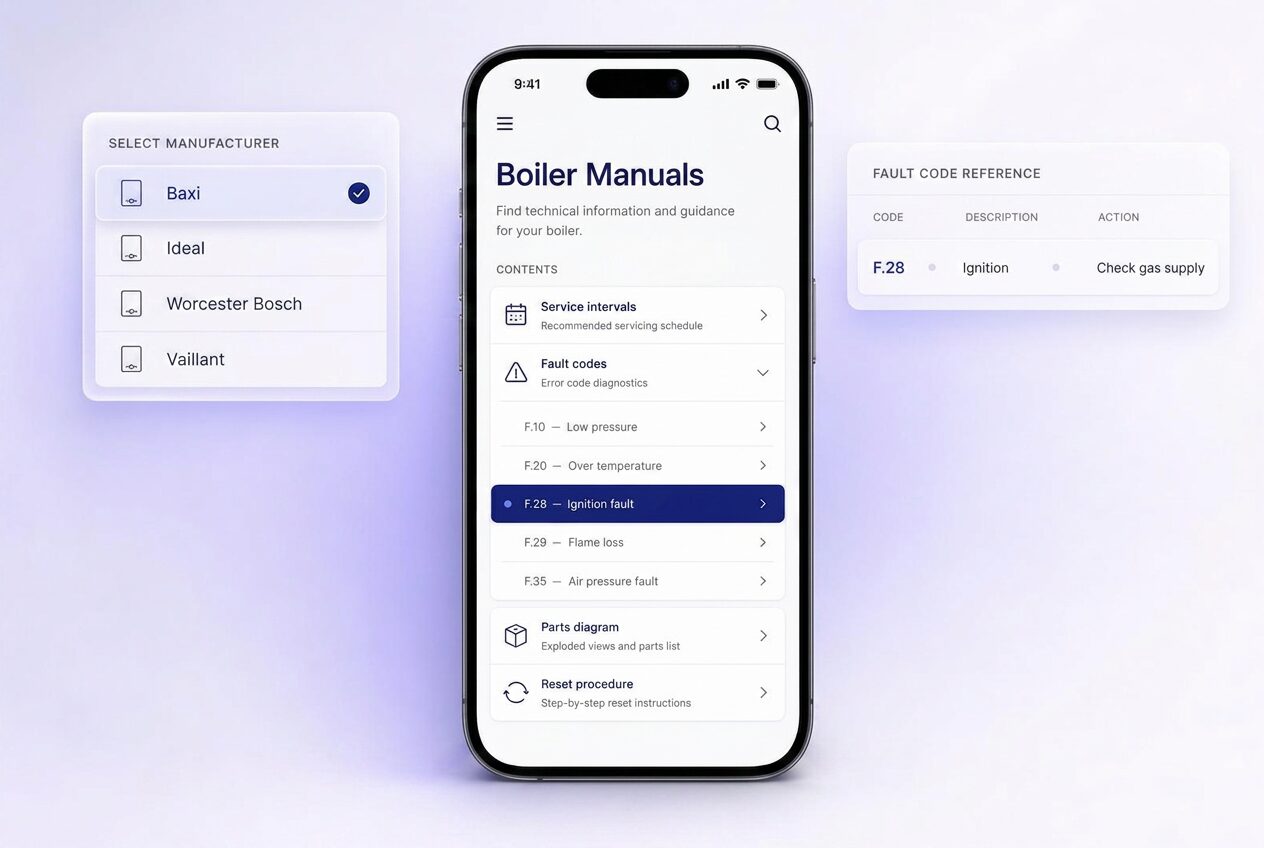
Checker was built by a former gas engineer to be the all-in-one the certificate apps stop short of. Gas safety record and CP12 generation sit close to the centre of the app, not bolted on, and the record flows straight into scheduling, invoicing and the customer’s history. Records work offline in a signal dead plant room and sync on reconnect, the annual service reminder fires around eleven months after a customer record is created, and you can even take card payment on site.
It syncs two way with Xero, QuickBooks and Sage, and runs month to month from £10.99 per sub-user plus VAT, up to £25.99 for the top tier, with no lock-in. For a gas engineer moving off a standalone certificate app, it keeps the thing you already trust, the compliant certificate, and adds the diary, the invoice, the payment and the repeat business around it.

Commusoft
Commusoft is a dispatch focused all-in-one aimed at multi engineer firms past the single van stage, with a native certificate set covering CP12, EICR, Minor Works and PAT.
It is a heavier platform, and standard plans are quote only on a twelve month contract, designed for teams of six or more. A strong destination if you are scaling a team, a lot of tool for a sole trader.

Joblogic
Joblogic is built for contract driven, multi site commercial operators, with certification modules and multi site scheduling.
The headline price is £45 per user per month billed annually, with higher tiers quote only. Best suited to larger commercial operations rather than a one or two van gas business.

Powered Now
Powered Now is a forms led all-in-one with confirmed native offline working and a certificate library reaching CP12, CP2, EICR and more on the Pro plan and above. Its renewal reminders are tied to certificate dates.
Pricing sits at £28 to £40 per user per month, excluding VAT. A good fit for sole traders who live in quotes and forms and want reliable offline paperwork.
Comparison table: where gas engineers move to
The main all-in-one destinations for a gas engineer leaving a standalone certificate app, listed in display order rather than ranked. The starting points covered above range from genuinely certificate first tools like GasCert to broader apps such as Gas Certificate App and Gas Engineer Software that already add job and invoicing features.
| Tool | Gas certificates | Job management and invoicing | Works offline | Contract | Price | Best suited for |
|---|---|---|---|---|---|---|
| Commusoft | Yes, native: CP12, EICR, Minor Works, PAT | Yes, dispatch focused | Yes, native offline mode | 12 month contract | Quote only, 6+ staff | Multi engineer firms scaling a team |
| Checker | Yes, native CP12 and gas safety records | Yes, plus card payment and chasers | Yes, syncs on reconnect | Month to month, no lock-in | From £10.99/sub-user (+VAT) | Gas engineers wanting certificates and the whole job in one app |
| Gas Engineer Software | Yes, broad gas record and certificate library | Yes, plus customer histories, quotes, payments and reminders | Yes, mobile records and business workflows work offline | No fixed contract | From £18/user/month annually, ex VAT | Gas focused sole traders and teams wanting the whole workflow together |
| Joblogic | Yes, certification modules | Yes, multi site | Yes, works on and offline | Billed annually (rolling option) | £45/user/month | Larger commercial, multi site operators |
| Powered Now | Yes: CP12, CP2, EICR and more (Pro+) | Yes, forms and quote led | Yes, confirmed native offline | Month to month | £28 to £40/user/month, ex VAT | Sole traders who live in quotes and forms |
Frequently asked questions
Should a gas engineer switch from a certificate app to all-in-one software?
It depends on how much of your business lives outside the certificate. If you only produce records, a standalone certificate app is fine. If you also juggle a diary, invoices, payments and customer follow up in separate tools, all-in-one software removes the retyping and the dropped follow ups by keeping the record, the job, the invoice and the customer in one place.
Will I lose my old certificates if I switch software?
Not if you switch carefully. Export your existing certificates as PDFs and your customer list as a spreadsheet before you move, import them into the new app, and keep the old app read only for a short overlap until you have confirmed everything is present. Because gas safety records must be kept for at least two years, never delete the old records until copies are stored in the new system.
Do I still meet gas safety rules if my records are only in an app?
Yes. There is no legal requirement to use paper. A digital gas safety record is valid as long as it meets the regulations: the check is done at least every twelve months, the record is kept for at least two years, and the tenant gets a copy within 28 days. Software actually reduces the compliance risk by storing records centrally and flagging renewal dates.
What should I check before moving to a new gas app?
Four things. Can you export your certificates and customer list from the old app; will past records stay accessible after the move; is the new tool month to month or a fixed contract; and does it capture certificates offline in the plant rooms and basements where you lose signal. Getting clear answers first is what makes a switch painless.
Which all-in-one apps do gas engineers move to?
The common options include Gas Engineer Software, Checker, Commusoft, Joblogic and Powered Now. GES and Checker both combine gas certificates with job and customer management, scheduling, invoicing and reminders, while the other platforms suit larger teams or different ways of working. The comparison table above sets out the differences.
Daniel Sedgwick
Daniel Sedgwick, known on the tools as Dan, founded Checker after years working as a gas engineer. He built Checker around the gas safety records he spent his career issuing, then added the diary, invoicing and reminders he was previously juggling in three other apps.
Keep the certificate, gain the whole job
Checker keeps the compliant gas safety record you already trust and folds in the diary, the invoice, on site card payment and the annual reminder that wins the next visit. Records work offline and sync on reconnect, and there is no contract tying you in. A sub-user seat starts at £10.99 a month plus VAT.
Get Started Free